


Slide (0,0)
UFV Logo
DEC Logo
DEC • UFV
PPGEC Logo
CAPES Grade 6 • International Excellence Est. 1991

GRADUATE PROGRAM IN CIVIL ENGINEERING PPGEC Institutional Overview

Academic Guide for Prospective Graduate Students, Postdoctoral Fellows, and Visiting Scholars. Advanced Research Lines, Analytical Infrastructure, and International Partnerships.

Mobile Portal QR Code Scan for Web Portal & Regulations
Department of Civil Engineering

Universidade Federal de Viçosa (UFV)

Viçosa, Minas Gerais — Brazil

Use Space or → to advance horizontally.
Institutional Overview & Evolution

Historical Trajectory & Academic Excellence

PPGEC Logo
CAPES Concept 6 (2021–2024)
610 Completed Degrees
480 M.Sc. Dissertations
130 Ph.D. Theses
1991
Master's (M.Sc.) Foundation in Geotechnics Pioneering civil engineering graduate education in the interior of Minas Gerais state.
2003
Doctorate (Ph.D.) Expansion in Geotechnics Accreditation of doctoral qualification, expanding high-level research capabilities.
2005
Spatial Information & Sanitary/Environmental Expansion Multidisciplinary growth in geomatics, water security, and ecological sanitation systems.
2007
Establishment of Construction Engineering Consolidating the 4 core areas with advanced structural systems and eco-materials.
Integrated with DEC undergraduate degrees: Civil, Environmental, and Surveying/Cartographic Engineering.
Research Architecture

Concentration Areas

Core research programs driving multi-user labs and visiting scholar positions:

Geotechnical Engineering Soil mechanics, tailings dams, ground stabilization, and foundation integrity.
Spatial Information Geomatics, remote sensing, geospatial analytics, BIM, and digital cartography.
Sanitary & Environmental Engineering Wastewater biorefineries, microalgae, watershed hydrology, and circular sanitation.
Construction Engineering Structural mechanics, low-carbon binders, high-performance concrete, and durability.
CCE Building • Room 224
Source: PPGEC/DEC/UFV Institutional Evaluation & CAPES Sucupira Quadrennial Data (2021–2024). Use navigation keys ← →
Strategic Framework

Mission, Vision & Objectives

Mission

To produce relevant and high-quality knowledge for society and qualify high-level human resources in Engineering, through academic best practices, collaboratively, and with commitment to truth, ethics, and sustainability, focused on people and aligned with global demands.

Vision

To be recognized nationally and internationally as a graduate program of profound relevance, through its contributions to scientific and technological advancement in Engineering I and the excellence of qualified human resources.

Core Objectives
  • Qualify faculty, researchers, and engineers to generate and disseminate sustainable civil engineering knowledge across all 4 concentration areas.
  • Develop cutting-edge scientific research and technological solutions addressing environmental resilience and infrastructure durability.
  • Foster multidisciplinary interactions linking undergraduate teaching, graduate research, and community outreach within DEC/UFV.
  • Strengthen international consortia, academic exchanges, and collaborative initiatives with worldwide research institutions.
Academic Structure & Specializations

Concentration Areas & Research Lines

PPGEC Logo

Geotechnics

Est. 1991

Pioneering area of PPGEC. Comprehensive scientific and technological investigation in soils, rocks, and geotechnical infrastructure.

Research Lines:
  • Analytical & Experimental Geotechnics
  • Environment & Environmental Quality
  • Transportation Systems & Infrastructure

Spatial Information

Est. 2005

Cutting-edge geospatial research addressing digital analysis, high-resolution mapping, and physical space modeling.

Research Lines:
  • Cartography, GIS & Remote Sensing
  • Geodesy & Hydrography

Sanitary & Env.

Est. 2005

Sustainable water resource management, circular sanitation systems, and advanced biotechnological environmental processes.

Research Lines:
  • Energy & Material Recovery in Sanitation
  • Processes, Technologies & Env. Health

Construction Eng.

Est. 2007

Technological materials innovation, low-carbon binders, construction management optimization, and structural mechanics.

Research Lines:
  • Building Processes & Materials Technology
  • Structural Systems & Mechanical Behavior
Cross-Cutting Line Computational Methods Applied to Engineering (Shared across all 4 concentration areas)
Advance horizontally:
Concentration Area

Geotechnical Engineering

Operating since 1991, Geotechnics holds the longest academic record in PPGEC. It investigates analytical modeling, field characterization, mining tailings dam risk, transport geotechnics, and environmental soil stability.

Associated Laboratorial Facilities: Laboratory of Geotechnics, Asphalt Mixtures & Materials Testing Unit (LMAM), Field In-Situ Instrumentation Cells.
Transversal Computation: Finite element modeling (FEM), slope stability analysis, and constitutive soil-structure interaction.
Concentration Area

Spatial Information

Established in 2005, the Spatial Information area develops research in geodetic positioning, physical surface modeling, satellite remote sensing, laser scanning (LiDAR), photogrammetry, and spatial decision systems.

Associated Laboratorial Facilities: Applied Cartography & Geodesy Hub (LEA), High-Performance Spatial Computing Stations, Hydrographic Survey Systems.
Transversal Computation: Geostatistical algorithms, point cloud processing, and automated spatial feature extraction.
Concentration Area

Sanitary & Environmental

Founded in 2005, this area prioritizes water security, microalgae biotechnology for resource circularity, wastewater reclamation, solid waste treatment, and environmental watershed epidemiological surveillance.

Associated Laboratorial Facilities: Sanitary & Environmental Analysis Lab (LSA), Microalgae Biorefinery Pilot Facility, Environmental Chromatography Units.
Transversal Computation: Hydrodynamic water quality simulations, bioprocess kinetics modeling, and ecological risk models.
Concentration Area

Construction Engineering

Created in 2007, Construction Engineering investigates eco-efficient cements, supplementary cementitious materials, durability mechanisms, structural behavior under extreme actions, and lean digital construction.

Associated Laboratorial Facilities: Structures Laboratory (LBE) with 1000 kN Reaction Frame, Construction Materials Lab (LMC), TECHBIM Laboratory.
Transversal Computation: Non-linear structural analysis, multi-scale material degradation simulation, and BIM parametric automation.
Experimental Ecosystem & Multi-User Facilities

Research & Development Laboratories

PPGEC Logo

Geotechnics

5 Labs

Soil mechanics, rock stability, geosynthetics, and asphalt mixture characterization.

LMS: Soil Mechanics
LGA: Rock & Geophysics
LAM: Asphalt Materials
LMP: Pavement Mechanics
LGE: Geosynthetics Systems

Spatial & Comput.

3 Labs

Geomatics, digital twins, BIM systems, and advanced multi-physics numerical modeling.

LEA: Surveying & Cartography
BIM: Building Info Modeling
MCE: Computational Methods
Multi-core simulation cluster & high-precision RTK GNSS receivers.

Sanitary & Env.

LSA & Pilots

Water safety, effluent valorization, resource circularity, and biotechnology biorefineries.

LSA: Sanitary & Env. Analysis
Algae Biorefinery: Waste-to-Energy
Multi-User Units: Chromatography Hub
Continuous pilot bioreactors, ICP-OES, TOC, and molecular biology lines.

Construction & Struct.

5 Labs

Eco-binders, large-scale structural frames, composite failure tests, and durability.

LMC: Construction Materials
LBE: Large Scale Structures
LEM: Mechanical Testing
LCO: Composite Materials
REM: Materials Strength
Multi-User Hub Shared instrumentation access for international visiting scholars, postdoctoral fellows, and R&D partners.
Advance horizontally:
Experimental Domain

Geotechnical & Pavement Infrastructure

LMS (Mecânica dos Solos) & LGA (Geologia de Engenharia)

Automated triaxial shear testing, direct shear cells, oedometer consolidation benches, resonant column equipment, seismic refraction, and rock joint roughness testing.

LAM (Materiais Asfálticos) & LMP (Mecânica dos Pavimentos)

Dynamic shear rheometer (DSR), Brookfield rotational viscometer, asphalt mixture compaction, resilient modulus testing, and wheel tracking rutting simulators.

LGE (Geossintéticos)

Wide-width tensile strength, soil-geosynthetic interface pullout boxes, hydrodynamic permittivity, and apparent opening size testing apparatus.

Experimental Domain

Spatial Information & Computation Hub

LEA (Agrimensura e Cartografia)

Geodetic GNSS dual-frequency stations, robotic total stations, digital levels, UAVs equipped with multispectral sensors, and terrestrial laser scanners (LiDAR).

BIM (Modelagem da Informação da Construção)

High-end graphic workstations for 3D/4D/5D building modeling, clash detection, digital twin integration, IFC interoperability, and construction lifecycle simulation.

MCE (Métodos Computacionais em Engenharia)

Parallel computational processing nodes for non-linear finite element modeling (FEM), fluid-structure interaction (FSI), boundary elements (BEM), and code development.

Experimental Domain

Sanitary & Environmental Research Facilities

LSA (Engenharia Sanitária e Ambiental)

Spectrophotometers, gas chromatography (GC-MS), liquid chromatography (HPLC), TOC analyzer, respirometric meters, and standardized water/wastewater physical-chemical analysis units.

Microalgae Biorefineries & Pilot Plant

Outdoor open raceway ponds, photobioreactors, anaerobic digestion digesters with biogas quantification, nutrient recovery centrifuges, and biomass harvesting systems.

Shared Multi-User Campus Network

Direct institutional connection with UFV Central Analytics (NUPEX), XRD, SEM-EDS scanning electron microscopy, and inductively coupled plasma spectrometry.

Experimental Domain

Structures, Materials & Mechanics

LBE (Laboratório de Estruturas)

Strong reaction floor and steel frame with dynamic hydraulic actuators up to 1000 kN, full-scale beam and column testing rigs, and automated multi-channel strain gauge acquisition.

LMC (Materiais de Construção) & REM (Resistência dos Materiais)

Universal servo-hydraulic testing machines (EMIC / INSTRON), environmental curing chambers, accelerated carbonation chambers, chloride migration cells, and ultrasonic pulse velocity probes.

LEM (Ensaios Mecânicos) & LCO (Materiais Compósitos)

High-temperature ovens, impact Charpy tests, microhardness testers, filament winding facilities for fiber-reinforced polymers (FRP), and vacuum-assisted resin infusion molding.

Strategic Plan 2025–2029 • PDI / UFV

Global Mobility & Internationalization Ecosystem

PPGEC Logo
Strategic Pillar 2025–2029
~30% Faculty Trained Abroad (7 of 23 Profs.)
4 English Courses (+2 In Progress)
>10% Theses in English (2021–2024)
7+ Partner Nations (Origin & Mob.)
Bilingual Academic Environment & Core Seminars Mandatory graduate courses CIV 797 (Seminar) and CIV 799 (Research) are offered in English to fully support non-Portuguese speakers.
Permanent Internationalization Committee & Trilingual Calls Bilingual institutional portal, social media channels, and admission calls published in Portuguese, English, and Spanish.
Enrolled foreign students from Colombia, Pakistan, DR Congo & Venezuela.
Global Integration

Academic Mobility & Networks

Strategic platforms enabling outbound researcher mobility and hosting international collaborators:

CAPES PDSE & Sandwich Ph.D. Doctoral internships abroad in sustainability, biofuels, structural safety, and geotechnics.
Visiting Scholars & Short Courses Specialized modules led by guest scholars (e.g., probabilistic modeling by Prof. Xavier Romão).
Consortia: Move La América, GCUB & UNITA Co-advised joint degrees, Latin American fellowships, and active European university alliances.
Global Alumni Placement Graduates appointed as researchers and Ph.D. fellows in Germany, Portugal, Austria, and across the Americas.
UFV International Office (DRI)
Source: PPGEC Institutional Internationalization Policy & UFV Strategic Institutional Development Plan (PDI). Use navigation keys ← →
Institutional Agreements

International Cooperation & Consortia

Move La América & GCUB Mobility

Coordination with CAPES and the Grupo de Cooperação Internacional de Universidades Brasileiras (GCUB) for master's and doctoral scholarships dedicated to Latin American and Caribbean candidates.

UNITA Universitas Montium Alliance

Active participation in academic exchange networks, virtual mobility, and shared research clusters in renewable resources, circular economy, and territorial heritage with European partner universities.

Collaborations with Research Groups in Europe & the Americas

Joint scientific publications, co-supervision of dissertations/theses, and dual-degree agreements with leading faculty in Germany, France, Spain, Portugal, Canada, and the United States.

International Conferences & Hosting

Active institutional leadership in organizing international symposia (such as Slope Stability) and technical visits by internationally renowned researchers.

Real-World Relevance & Technology Transfer

Societal Impact, Public Policies & Innovation

PPGEC Logo

Public Policies

National Reach

Direct scientific leadership in large-scale governmental initiatives advancing land tenure regularization and social justice.

RADIS Project (INCRA): Environmental & land regularization across Brazilian rural settlements with comprehensive in-situ audits.
AMARIS Project (Legal Amazon): Socioeconomic data collection and validation for ~20,000 families, providing legal certainty and title deeds.

Infrastructure & Risk

BIM & AI

Digital modernization of transport assets and AI-based geological risk reduction for climate adaptation.

DNIT Strategic Alliance: National BIM implementation for special highway structures, automated structural auditing & trained engineers.
Climate Adaptation & Risk Plans: Municipal risk reduction plans utilizing AI spatial mapping against urban landslides and severe floods.

Circular Bioeconomy

UN 2030 SDGs

Translating science into low-carbon building systems, resource-recovering biorefineries, and social inclusion.

Eco-Efficient Materials (A1 Papers): Alkali-activated binders, slag recycling, ornamental stone paints, and cementitious smart sensors.
Microalgae Biorefineries: Wastewater nutrient recovery producing bioenergy, organic biofertilizers, and high-value bioproducts.
Community & Outreach Technical assistance to low-income housing ("Colorindo" Project) & direct social vulnerability alleviation.
Advance horizontally:
Public Policy Leadership

National Territorial Governance

RADIS Project (Regularização Ambiental e Fundiária)

Extensive in-situ audits and technical diagnostics across hundreds of rural settlement projects in Brazil, providing the National Institute for Colonization and Agrarian Reform (INCRA) with precise technical data for environmental licenses and land regularization.

AMARIS Project (Legal Amazon Domain)

Direct socio-economic surveying, boundary demarcation, and geospatial cataloging for ~20,000 rural families across the Legal Amazon. Guarantees legitimate legal property rights, mitigates agrarian conflicts, and unlocks federal welfare programs.

Infrastructure Modernization

BIM Deployment & Disaster Mitigation

DNIT Special Bridge & Viaduct Program (OAEs)

Pioneering BIM integration within Brazil's National Department of Transport Infrastructure. Creation of the dedicated BIM Laboratory at UFV, design of automated finite element analysis scripts, and continuous training of national transportation civil engineers.

Artificial Intelligence in Risk Mapping

Algorithmic risk evaluation combining satellite imagery, LiDAR point clouds, and hydrologic modeling to draft Municipal Disaster Risk Reduction Plans (PMRR), safeguarding vulnerable municipal areas against landslides and flash floods.

Global Agenda

UN Sustainable Development Goals (SDGs)

Targeted UN Sustainable Development Goals:
  • SDG 1 & 10 (No Poverty & Reduced Inequalities): Land titling in Amazonia & low-income technical construction assistance.
  • SDG 6 (Clean Water and Sanitation): Microalgae biorefineries for decentralized effluent recovery.
  • SDG 9 & 11 (Industry, Innovation & Sustainable Cities): BIM adoption and low-carbon cement formulations.
  • SDG 12 & 13 (Responsible Consumption & Climate Action): Metallurgical slag valorization and urban landslide mitigation.
Prototyping and Testing Nucleus

Collaborative incubator unit connecting graduate students, university spin-offs, and startups to pilot circular construction materials and structural telemetry hardware.

Institutional Governance • Cycle 2025–2028

Strategic Planning & Performance Management

PPGEC Logo

Methodology

PDI 2024–2029

Four-year systematic planning cycle grounded on participatory SWOT analyses, biennial self-evaluation, and annual indicator auditing.

Participatory Governance: Direct engagement of faculty, graduate students, administrative staff, and alumni councils.
Management Tracking Systems: Process tracking via SEI-UFV and data synchronization with the CAPES Sucupira Platform.

Faculty & Funding

Expansion

Continuous academic faculty renewal and multi-source research funding diversification to expand state-of-the-art laboratory infrastructure.

5 New Permanent Faculty (JDPs): Integration of Early Career Permanent Faculty bolstering emerging technological research tracks.
External Grant Capture: Active funding pipelines via FINEP, DNIT partnerships, FAPEMIG calls, and CENTEV/UFV tech-hubs.

Action Axes

2025–2028

Structured quadrennial goals addressing curriculum modernization, graduation metrics, and high-tier academic output:

1. Pedagogical Bilingual courses & modular cross-area syllabi.
2. Knowledge Tier A1 papers & thesis-driven articles.
3. Global Reach Joint degrees & international defense panels.
4. Innovation CENTEV tech spinoffs & patent filings.
5. Facilities Multi-user lab infrastructure expansion.
6. Efficiency Reduced dropout & optimized defense times.
Continuous Audit Annual faculty output review and biennial program self-evaluation indexed to CAPES Sucupira standards.
Final slide:
Strategic Framework

Methodological Architecture & PDI Alignment

Integration with UFV PDI (2024–2029)

Direct synergy with institutional university goals across Research, Graduate Education, Internationalization, and Entrepreneurial Innovation, ensuring administrative consistency and federal funding eligibility.

SWOT-Driven Action Plan

Every planned initiative specifies operational managers, completion timelines, rationale, budgetary allocation, and verification sources within SEI-UFV and CAPES Sucupira.

Human Capital & Funding

Faculty Policy & Infrastructure Capture

Early Career Permanent Faculty (JDPs)

Acquisition of 5 young permanent professors in the latest quadrennium, targeting strategic emerging research lines such as composite structures, geospatial AI, and bio-electrochemical effluent treatment.

External Grant Capture Strategy

Securing capital investment via FINEP multi-user infrastructure calls, technological collaboration covenants with DNIT (BIM for special structures), and university business incubator partnerships via CENTEV.

Quadrennial Goals

Strategic Operational Axes (2025–2028)

1. Curriculum Modernization & 2. Knowledge Production

Regular assessment of courses by students and advisors, phasing out obsolete topics, expanding English offerings (CIV 797, CIV 799), and financial awards for Qualis A1 publications stemming directly from dissertations and theses.

3. Global Outreach & 4. Innovation / Tech Transfer

Targeting an increase in co-supervised doctoral degrees, mandatory foreign panel participation in defenses, patent filing acceleration, and technological entrepreneurship training linked to CENTEV/tecnoPARQ.

5. Laboratory Infrastructure & 6. Program Consolidation

Proactive recruitment of high-performing candidates, institutional mitigation of student dropout rates, and strict adherence to normative completion windows (24 months for M.Sc. and 48 months for Ph.D.).

Academic Leadership & Mentorship

Faculty Directory & Research Supervisors

PPGEC Logo

Geotechnics

8 Faculty

Rock mechanics, geotechnical geophysics, dams, pavement infrastructure, and environmental geotechnics.

Prof. Cibele Cláuver Rock Mech.
Prof. Eduardo Marques PQ-1C
Prof. Heraldo Pitanga PQ-2
Prof. Klaus Rodrigues JDP
Prof. Natalia Brasil JDP
Prof. Rejane Nascentes PQ-2
Prof. Roberto Ferraz Perm.
Prof. Taciano Silva PQ-2

Spatial Info

6 Faculty

Cartographic quality, hydrography, geodesy, photogrammetry, remote sensing, and GIS spatial modeling.

Prof. Afonso de Paula Quality GIS
Prof. Daniel Duarte GIS / Sens.
Prof. Darlan Nunes JDP
Prof. Ítalo Ferreira Hydrography
Prof. Marconi Cunha JDP
Prof. Nilcilene Medeiros Photogram.
Prof. William Dal Poz Geodesy

Sanitary & Env.

4 Faculty

Effluent ecotoxicology, microalgae bioenergy, hydraulics, environmental BIM, and watershed risks.

Prof. Ann H. Mounteer Ecotox/Biol.
Prof. Emmanuel Teixeira JDP / BIM
Prof. Gabriela Rezende JDP
Prof. Maria Lúcia Calijuri PQ-1A

Construction Eng.

8 Faculty

Alkali-activation, fire safety engineering, composite systems, structural mechanics, and eco-materials.

Prof. Carol Rezende JDP
Prof. Diogo Oliveira Foundations
Prof. Flávio Ferreira JDP
Prof. Gustavo Veríssimo Steel/Comp.
Prof. José Carlos Ribeiro Fire Safety
Prof. José Luiz Rangel Systems
Prof. José Maria Carvalho Coord. / PQ-2
Prof. Leonardo Pedroti PQ-2
Research Supervision CNPq Productivity Fellows (PQ-1A, 1C, PQ-2), Early Career Permanent Faculty (JDPs), and International Advisors.
Final slide:
Concentration Area

Geotechnical Engineering Faculty (8)

Prof. Cibele Cláuver
Prof. Cibele Cláuver de Aguiar Brandão Permanent Professor
Geological Engineer (UFV) • Autoavaliação e Planejamento

Rock mechanics, geophysical monitoring of dams, foundations, slopes, and artificial intelligence applied to geotechnical data processing.

Prof. Eduardo Marques
Prof. Eduardo Antônio Gomes Marques CNPq PQ-1C
Geologist (UFV) • Permanent Professor

Engineering geology, rock mechanics, geotechnical cartography, slope stability analysis, hydrogeology, and environmental protection.

Prof. Heraldo Pitanga
Prof. Heraldo Nunes Pitanga CNPq PQ-2
Civil Engineer (UFJF) • Comissão Coordenadora

Environmental geotechnics, geosynthetics application in geotechnical barriers, and sustainable transportation infrastructure.

Prof. Klaus Rodrigues
Prof. Klaus Henrique de Paula Rodrigues Young Permanent Professor (JDP)
Civil Engineer (UFV) • PROAP Coordinator

Pavement engineering, transport systems, construction materials durability, and sustainable technologies for asphalt mixtures.

Prof. Natalia Brasil
Prof. Natalia Assunção Brasil Silva Young Permanent Professor (JDP)
Civil Engineer (UFSJ) • Seleção e Bolsas

Environmental geotechnics, urban mobility planning, transport infrastructure, and sustainable road construction materials.

Prof. Rejane Nascentes
Prof. Rejane Nascentes CNPq PQ-2
Civil Engineer (UFV) • Comunicação e Reconhecimento Acadêmico

Contaminant transport, soil chemistry, solid/liquid waste containment, column testing, diffusion batch assays, and sanitary landfills.

Prof. Roberto Ferraz
Prof. Roberto Lopes Ferraz Permanent Professor
Civil Engineer (UFV) • Geotechnical Mechanics

Earthworks, environmental geotechnics, chemical soil stabilization, foundation design, and advanced numerical modeling.

Prof. Taciano Silva
Prof. Taciano Oliveira da Silva CNPq PQ-2
Civil Engineer (UFV) • Transportation Systems

Transport operations, watershed management and conservation, tropical soil pavement engineering, and unpaved road networks.

Concentration Area

Spatial Information Faculty (6)

Prof. Afonso Santos
Prof. Afonso de Paula Santos Permanent Professor
Surveying Engineer (UFV) • Comissão Coordenadora / Seleção e Bolsas

Cartography, GIS, and Remote Sensing with emphasis on positional quality control and cartographic base accuracy.

Prof. Daniel Duarte
Prof. Daniel Camilo de Oliveira Duarte Permanent Professor
Surveying Engineer (UFV) • Geospatial Analytics

Advanced research in automated thematic mapping, geographic information systems, spatial databases, and satellite sensors.

Prof. Darlan Nunes
Prof. Darlan Miranda Nunes Young Permanent Professor (JDP)
Surveying Engineer (UFV) • Geospatial Technologies

Remote sensing classification, digital image analysis, geographic information systems, and thematic cartographic modeling.

Prof. Italo Ferreira
Prof. Ítalo Oliveira Ferreira Permanent Professor
Surveying Engineer (UFV) • Geodesy & Hydrography

Geodesy, acoustic hydrographic surveying, bathymetric uncertainty evaluation, vertical datums, and maritime charting.

Prof. Marconi Cunha
Prof. Marconi Martins Cunha Young Permanent Professor (JDP)
Surveying Engineer (UFV) • Comunicação e Reconhecimento Acadêmico

Cartography, GIS, and Remote Sensing with advanced emphasis on positional accuracy assessment and digital surface validation.

Prof. Nilcilene Medeiros
Prof. Nilcilene das Graças Medeiros Permanent Professor
Cartographic Engineer (UFV) • PROAP Coordinator

Photogrammetry, digital image processing, LiDAR sensor systems, point cloud feature segmentation, and close-range metric modeling.

Prof. William Dal Poz
Prof. William Rodrigo Dal Poz Permanent Professor
Cartographic Engineer (UFV) • Autoavaliação e Planejamento

Physical and geometric geodesy, GNSS high-precision positioning algorithms, coordinate transformations, and geodetic reference networks.

Concentration Area

Sanitary & Environmental Faculty (4)

Prof. Ann Mounteer
Prof. Ann Honor Mounteer Permanent Professor
Biologist (USA/Canada) • Comissão Coordenadora

Water and wastewater quality, advanced effluent treatment, aquatic ecotoxicology, and microbiology of biological degradation processes.

Prof. Emmanuel Teixeira
Prof. Emmanuel Kennedy da Costa Teixeira Young Permanent Professor (JDP)
Environmental Engineer (UFV) • Comunicação & Seleção/Bolsas

Environmental sanitation technologies, hydraulic engineering, digital modeling (BIM), drainage systems, and water resources management.

Prof. Gabriela Rezende
Prof. Gabriela Rezende de Souza Young Permanent Professor (JDP)
Environmental Engineer (UFV) • Autoavaliação e Planejamento

Environmental sanitation processes, biological wastewater treatment systems, environmental quality control, and public health engineering.

Prof. Maria Lucia Calijuri
Prof. Maria Lúcia Calijuri CNPq PQ-1A
Civil Engineer (UFV) • PROAP Coordinator

Microalgae biorefineries for bioenergy and agricultural biofertilizers, wastewater bioremediation, and GIS for territorial environmental risk mapping.

Concentration Area

Construction Engineering Faculty (8)

Prof. Carol Rezende
Prof. Carol Ferreira Rezende Santos Young Permanent Professor (JDP)
Civil Engineer (UFV) • Seleção e Bolsas / PROAP

Composite steel-concrete structures, structural masonry, reinforced concrete, industrial waste valorization, and non-linear numerical analysis.

Prof. Diogo Oliveira
Prof. Diogo Silva de Oliveira Permanent Professor
Civil Engineer (UFV) • Comunicação e Reconhecimento Acadêmico

Reinforced concrete foundation structures, strut-and-tie modeling (STM), structural design of footings, and experimental tests on pile caps.

Prof. Flavio Ferreira
Prof. Flávio Antônio Ferreira Young Permanent Professor (JDP)
Civil Engineer (UFV) • Autoavaliação e Planejamento

Alkali-activated materials, mining waste valorization, structural fire engineering, forensic structural integrity, and retrofitting.

Prof. Gustavo Verissimo
Prof. Gustavo de Souza Veríssimo Permanent Professor
Civil Engineer (UFV) • Structures & Mechanics

Steel structures, composite steel-concrete members, full-scale structural testing, connection behavior, and computational mechanics.

Prof. Jose Carlos Ribeiro
Prof. José Carlos Lopes Ribeiro Permanent Professor
Civil Engineer (UFV) • Fire Safety Engineering

Fire safety engineering, thermo-mechanical behavior of materials under extreme fire exposure, non-linear finite element modeling (FEM).

Prof. Jose Luiz Rangel
Prof. José Luiz Rangel Paes Permanent Professor
Civil Engineer (UFV) • Construction Systems

Steel structures, composite systems, precast concrete structures, building construction processes, and computational automation.

Prof. Jose Maria Carvalho
Prof. José Maria Franco de Carvalho Course Coordinator • CNPq PQ-2
Civil Engineer (UFV) • Construction Materials & Eco-binders

Sustainable materials, eco-efficient concretes, mining and industrial waste reuse, cementitious matrix technology, and road bridge asset management.

Prof. Leonardo Pedroti
Prof. Leonardo Gonçalves Pedroti CNPq PQ-2
Civil Engineer (UFV) • PROAP Coordinator

Construction materials technology, structural ceramics, industrial waste incorporation, masonry systems, and soil-cement composites.

Academic Demographics & Community Profile

Student Body & Research Cohort Overview

PPGEC Logo
156 Active Researchers Total Graduate Roster
86 Master's (M.Sc.) 55.1% of Cohort
62 Doctorate (Ph.D.) 39.8% of Cohort
8 Postdoctoral Fellows 5.1% of Cohort
Distribution by Area 156 Enrolled
Geotechnics 50 (32.1%)
33 M.Sc. • 16 Ph.D. • 1 Postdoc
Construction Engineering 46 (29.5%)
25 M.Sc. • 20 Ph.D. • 1 Postdoc
Sanitary & Environmental 32 (20.5%)
13 M.Sc. • 13 Ph.D. • 6 Postdoc
Spatial Information 28 (17.9%)
15 M.Sc. • 13 Ph.D.
Degree Balance: 1.38 Master's / 1.00 Doctorate
Nationality & Origin
Domestic (Brazil) Regional & National Mobility
95.5%
International Cohort Full-degree & Joint Scholars
4.5%
International Student Countries of Origin:
🇨🇴 Colombia 🇳🇬 Nigeria 🇵🇰 Pakistan 🇨🇩 DR Congo 🇻🇪 Venezuela
Welcoming scholars via GCUB & Move La América programs.
Undergraduate Origin

Interdisciplinary admissions across diverse applied science engineering sectors:

Civil Engineering ~58%
Environmental & Sanitary ~18%
Surveying & Cartography ~14%
Geology & Earth Sciences ~5%
Architecture & Others* ~5%
*Includes Mining, Electrical, Mechanical & Applied Physics.
Data Source PPGEC Graduate Secretariat Official Academic Enrollment Registry (2026).
Final slide:
Career Placement & Employability Profile

Alumni Outcomes & Industry-Academia Leadership

PPGEC Logo
272 Mapped Alumni Quadrennium 2021–2024
198 M.Sc. Graduates 72.8% of Cohort
74 Ph.D. Graduates 27.2% of Cohort
92% Faculty Placement Public Ph.D. Outcomes
Sector Destination M.Sc. vs Ph.D. Paths
Master's Graduates (Terminal) Industry Heavy
58% Private Sector 35% Public Sector 7% Other/Third
Doctorate Graduates Academia Driven
68% Public Sector 28% Private/Industry 4% Other
Ph.D. Continuation: Most PPGEC M.Sc. scholars continue doctoral training at UFV
Top Employers & Roles
Federal Higher Education (92% Ph.D.) Permanent faculty at Federal Universities (UFBA, UFOP, UFSJ, UFMT, UFRRJ) & Federal Institutes (IFMG, IFNMG, IFB).
Industry & Engineering Consulting Specialized design firms, mining multinationals (VALE, CSN, Samarco), energy corporations (Petrobras), and pulp & paper (Suzano).
Executive Leadership & Spin-offs Dean offices, corporate VP/director positions, public infrastructure agencies (DNIT, DER), and tech startup founders.
High H-index alumni output with registered INPI software and patents.
International Reach

Active global presence across academic centers and international engineering firms:

🇩🇪 Germany Research Centers
🇵🇹 Portugal Universities
🇦🇹 Austria Ph.D. Programs
🇨🇴 Colombia & 🇵🇪 Peru Industry & Fac.
Data Verification PPGEC Alumni Quadrennial Tracking Survey (Lattes, LinkedIn & CNPq Verified, 2021–2024).
Final slide:
Alumni Profile

Career Impact & Technological Intellectual Property

Public Higher Education Insertion

Over 92% of public sector doctorate holders hold tenured faculty and research chairs across federal universities (UFBA, UFOP, UFRRJ, UFRB, UFMT, UNIFAL, UFSJ, UNILAB) and Federal Institutes of Education, Science and Technology, driving regional scientific decentralized growth.

High-Tier Industry Leadership & Entrepreneurship

Alumni head engineering teams at VALE, Samarco, CSN, Petrobras, and Suzano, addressing critical dam safety, pavement degradation, and industrial waste recycling. Several ex-students are founders and CEOs of specialized geotechnical, structural, and environmental consultancy spin-offs.

Intellectual Property & International Standing

Numerous software packages and utility patents registered at the Brazilian National Institute of Industrial Property (INPI) originated from master's dissertations and doctoral theses. Alumni pursuing postdoctoral training abroad represent the program across European and Latin American scientific hubs.

Institutional Gateway • Visiting Researchers & Admissions

Academic Leadership & Program Contacts
PPGEC Logo
Course Coordination
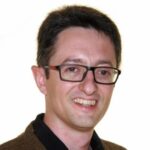
Prof. José Maria Franco de Carvalho

Prof. José Maria Franco de Carvalho

Program Coordinator

+55 (31) 3612-6518

josemaria.carvalho@ufv.br

CNPq PQ-2 • DEC / UFV

Academic Inquiries & Partnerships
Graduate Secretariat
PPGEC Secretariat

Administrative Secretariat

Staff & Registrars

+55 (31) 3612-6105

secretaria.ppgec@ufv.br

CCE Building • 2nd Floor, Room 224

Mon–Fri: 08:00–12:00 / 14:00–18:00
Access Channels
PPGEC Portal QR Code posengenhariacivil.ufv.br
Av. Peter Henry Rolfs, s/n • Campus Universitário • CEP 36570-900 • Viçosa, MG — Brazil